

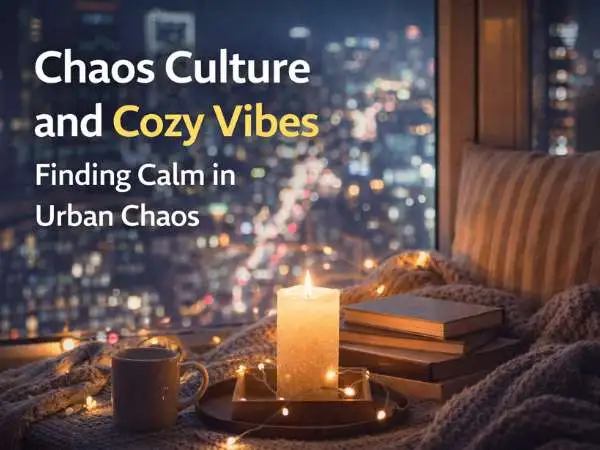
There’s a strange kind of exhaustion that doesn’t come from physical work. It comes from noise. Notifications. Headlines. Deadlines. Sirens outside the window. Group chats that never sleep. You wake up and your nervous system already feels like it ran a marathon.
That’s what many people now call chaos culture.
It isn’t just about messy rooms or busy schedules. It’s about living in a constant state of stimulation. Urban chaos amplifies it. Cities move fast. Screens move faster. The pressure to keep up quietly rewires how we experience rest. Even when we sit down, we don’t always feel settled.
Research in environmental psychology and stress science consistently shows that prolonged exposure to overstimulation raises cortisol levels and disrupts sleep patterns. The body reacts to digital overload in ways similar to physical stress. That means the background noise of modern life is not neutral. It accumulates.
And when the outside world feels loud, the inside needs to become intentional.
That’s where cozy vibes enter the picture—not as an aesthetic trend, but as a protective response.
What Is Chaos Culture?
Chaos culture is the normalization of constant urgency. It’s the belief that being overwhelmed is a sign of relevance. It shows up in packed calendars, multitasking during conversations, and scrolling before bed even when we’re exhausted.
Urban chaos feeds it. Crowded sidewalks. Compressed living spaces. Construction noise. Light pollution. Shared walls. The city rarely sleeps. Then technology removes the final boundary. There is no natural stopping point.
Psychologists have increasingly linked high media exposure and environmental clutter to increased anxiety and emotional fatigue. When stimuli remain high, the nervous system struggles to reset. You feel restless but drained. Alert but unfocused.
What makes chaos culture powerful is that it feels normal. Everyone seems busy. Everyone seems tired. The pace becomes standard.
But normal does not mean healthy.
When calm starts to feel unfamiliar, that’s a signal.
also read : – Wolf vs Dire Wolf: Size, Reality, Myth, and Why the Difference Matters
Cozy Vibes as a Nervous System Reset
Cozy is often misunderstood as decorative. In reality, it’s regulatory.
Warm lighting lowers alertness. Soft textures reduce sensory sharpness. Defined spaces decrease cognitive overload. These are not abstract ideas. They’re measurable environmental effects.
Studies show that warm light in the evening supports melatonin production more effectively than bright white light. Cluttered environments increase stress markers. Natural textures and greenery improve emotional stability and perceived comfort.
Cozy vibes are not about perfection. They are about safety signals.
When you walk into a space and your shoulders drop slightly, that’s your nervous system responding to cues. When you feel comfortable sitting still, that’s regulation.
The contrast matters. If urban chaos is sharp and fast, your home should be warm and slow.
Finding Calm in the Chaos
Calm doesn’t require a lifestyle overhaul. It requires small, repeatable adjustments.
One of the first shifts I made was changing lighting patterns. I stopped using overhead lights after sunset. I switched to warm lamps and indirect lighting. The atmosphere softened instantly. My evenings felt slower. My sleep improved subtly but noticeably.
Then I looked at visual clutter. Not everything at once. Just one surface. Clearing a single table created a visual pause. It gave my eyes somewhere to rest.
Research supports this idea. Even modest reductions in visual clutter can improve focus and reduce perceived stress. The brain processes every visible object, whether you notice it or not. When everything competes for attention, fatigue increases.
Finding calm in the chaos means choosing what your senses absorb.
It’s subtraction, not decoration.
How to Create a Peaceful Home Without Overcomplicating It
A peaceful home doesn’t have to look like a magazine spread. It needs coherence.
Start with light. Warm tones under 3000K feel calmer than cool white bulbs. Lamps placed at eye level create intimacy. Harsh ceiling lights often feel clinical.
Then consider texture. Hard surfaces reflect sound and light. Soft layers absorb both. A rug, a throw blanket, even fabric curtains change the sensory temperature of a room.
Sound plays a role too. Constant background television adds subtle tension. Gentle instrumental music or intentional silence lowers it.
Defined zones also matter. Even in small apartments, designating a corner for reading, a specific table for meals, or a chair for morning coffee builds predictability. Predictability reduces anxiety. The brain relaxes when it knows what a space is for.
Peace is built through intention, not expense.
also read : – Biggest Feline in the World: Wild Giants, Record Holders, and the Truth Behind the Largest Cats Ever Known
How to Make a Messy Room Feel Cozy
Perfection is unrealistic. Life creates mess.
But a messy room does not have to feel chaotic.
Lighting becomes your strongest ally. Dim the overhead glare. Turn on a warm lamp. Softer light reduces visual harshness and changes emotional tone.
Clear one anchor point. A nightstand. A desk corner. A coffee table. You don’t need to reset the entire room. One clear visual zone can shift the mood significantly.
Add scent if possible. Olfactory signals connect directly to emotional centers in the brain. Lavender, cedar, vanilla, or even fresh air can alter perception of comfort quickly.
Cozy is about atmosphere, not spotless surfaces.
Sometimes calm begins with small sensory edits rather than large cleaning sessions.
Can I Mix Minimalist and Maximalist Styles?
Yes, and in many cases, you should.
Minimalism offers clarity. Maximalism offers personality. The tension between the two creates balance.
A neutral foundation supports visual calm. That might mean simple furniture lines, muted walls, or uncluttered floors. On that base, you can layer character—art, books, textiles, objects with meaning.
Going fully minimalist can feel sterile. Going fully maximalist can feel overstimulating. The sweet spot lives in intentional contrast.
Research on environmental preference suggests people respond positively to moderate visual complexity. Too little feels empty. Too much feels chaotic. Balanced layering feels engaging without overwhelming.
Your home should feel alive, not loud.
Urban Chaos and the Need for Contrast
Urban chaos is not disappearing. Cities grow denser. Digital channels multiply. Attention becomes currency.
That makes personal sanctuary more important, not less.
Contrast creates resilience. When the outside world accelerates, your inside world can decelerate. When schedules tighten, rituals slow you down.
Morning light through a window. Evening tea in the same chair. A quiet corner free from screens.
These moments build stability.
Stability builds capacity.
Capacity allows you to re-enter the chaos without being consumed by it.
also read : – Biggest Snakes of the World: Facts, Myths, Real Sizes, and the Truth Behind Giant Snake Stories
Ritual as the Hidden Ingredient
Furniture shapes space. Ritual shapes experience.
A consistent bedtime routine lowers stress. A regular Sunday reset reduces anticipatory anxiety. Even ten minutes of mindful breathing in the same corner each day conditions the body to associate that space with calm.
Predictable patterns regulate the nervous system. Research on daily routines during periods of collective stress shows strong correlations between structured habits and emotional resilience.
In chaos culture, routine is resistance.
It says: this moment is mine.
When Busyness Becomes Identity
There’s another layer to chaos culture. Sometimes we internalize it. We equate exhaustion with productivity. We describe ourselves as “so busy” as if that confirms importance.
But chronic busyness does not equal fulfillment. It often equals depletion.
Your environment can either reinforce that depletion or counteract it.
If your space mirrors digital noise—bright lights, cluttered surfaces, constant sound—you never fully reset. If your space signals warmth and rest, recovery happens more naturally.
Creating cozy vibes is not indulgent. It is protective.
Final Thoughts
Urban chaos may define the rhythm of the outside world. It does not have to define the tone of your home.
Cozy vibes are not about trends. They are about nervous system health. Warm light, defined space, softened sound, meaningful objects—these choices send quiet signals of safety.
Finding calm in the chaos is less about escaping the city and more about shaping your corner of it.
You don’t need to eliminate noise everywhere. You need one place where it softens.
One lamp. One clear surface. One ritual that feels steady.
That’s enough to begin.
also read : – Maneki Neko Lucky Cat: Meaning, History, Colors, and Why People Trust It
FAQs
What is chaos culture?
Chaos culture refers to the normalization of constant overstimulation, busyness, digital noise, and environmental clutter in modern life, especially within urban settings.
How can I find calm in urban chaos?
Create contrast inside your home. Use warm lighting, reduce visual clutter, define clear zones, and build calming daily rituals.
How to create a peaceful home?
Focus on sensory elements—soft lighting, comfortable textures, reduced clutter, and intentional spaces that serve clear purposes.
Can I mix minimalist and maximalist styles?
Yes. Use minimalism as a calming base and layer in maximalist elements thoughtfully to add personality without overwhelming the space.
How to make a messy room feel cozy?
Dim the lights, clear one focal surface, add a soft textile, and introduce calming scent or fresh air. Atmosphere shifts perception quickly.