

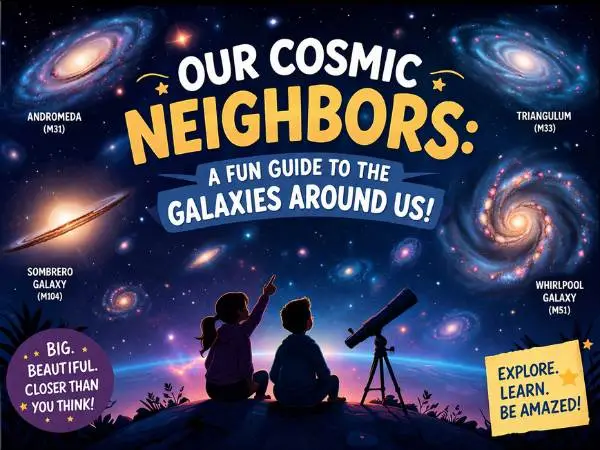
Have you ever looked up at the night sky and felt totally amazed by how huge the universe is? That tiny, twinkling dot you see with your bare eyes might not be a single star at all—it could be a massive galaxy! We’re talking about a bustling cosmic city packed with billions of stars, planets, and swirling space dust. It’s a mind-blowing thought, but trying to actually study this stuff can feel super overwhelming if you’re not a scientist.
Why Space Talk Can Be So Confusing
Let’s be real—science books about space can be incredibly dense! They usually throw a bunch of crazy math, heavy physics terms, and weird catalog numbers (like NGC or Messier) right at you. Words like “parsecs” and “dark matter” can make learning about space feel like a tough homework assignment instead of the awesome adventure it really is.
A Super Simple Tour of the Cosmos
To skip all that confusion, this guide is going to take you on a fun, easy tour of some of the coolest galaxies out there! We’re ditching the heavy math and just focusing on what our cosmic neighborhood actually looks like.
What Actually Is a Galaxy?
Before we dive in, what exactly is a galaxy? Basically, it’s a giant, glowing city in space! Instead of buildings, it’s made up of stars, leftover star parts, huge clouds of gas, dust, and mysterious dark matter, all glued together by gravity. These giant cosmic cities are the main building blocks of our universe. In fact, scientists guess there are hundreds of billions—maybe even trillions—of them floating around out there!
1. The Milky Way (Our Home Sweet Home)
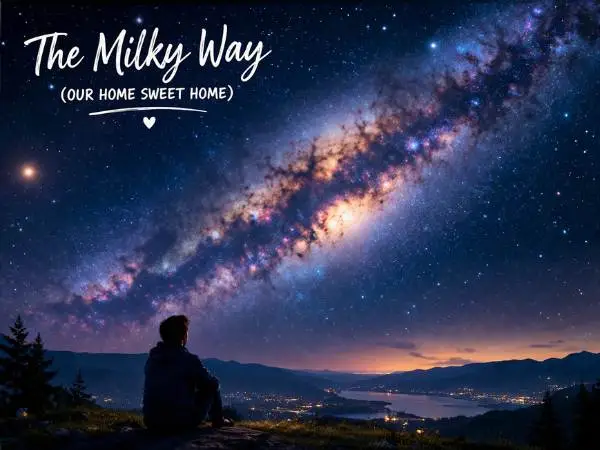
Let’s start with our home turf! The Milky Way is a “barred spiral” galaxy, which means it looks like a flat disk with beautiful, spinning arms coming out of a bright, thick center. If you look up on a really dark night, you can actually see it as a hazy, milky band stretching across the sky. Our Solar System lives in one of those outer arms, nestled quietly in the galactic suburbs, pretty far from the bright and busy downtown center. And it’s huge—over 100,000 light-years across!
2. The Andromeda Galaxy (The Giant Next Door)
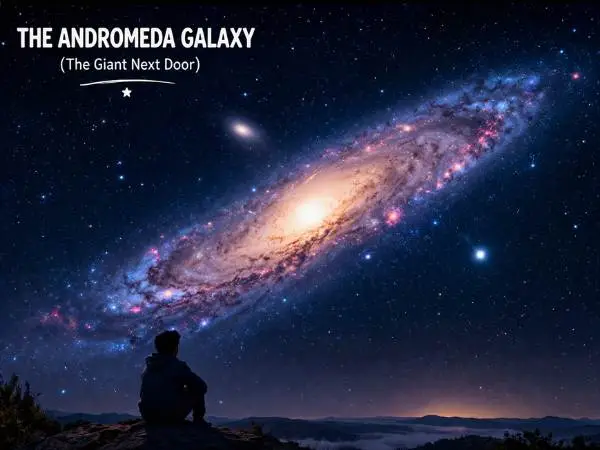
Meet our closest big neighbor, Andromeda! It’s another massive spiral galaxy, and it’s actually quite a bit heavier than our own. If you have a super dark sky, you can even spot it with your bare eyes as a fuzzy little smudge. But here’s the crazy part: Andromeda and the Milky Way are pulling on each other, and they’re on a crash course! Don’t panic, though—it won’t happen for about four billion years. When they finally meet, they’ll just do a slow dance and merge into one giant super-galaxy!
3. The Triangulum Galaxy (The Little Sibling)
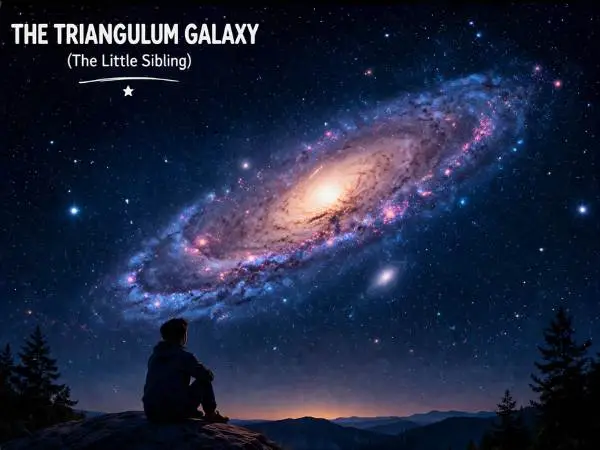
Triangulum hangs out with us and Andromeda in a little cosmic family called the “Local Group.” It’s much smaller than its two big siblings, but it’s a beautiful spiral galaxy famous for churning out brand-new stars at a super fast pace!
ALSO READ : – Top 10 Longest Rivers in the US: The Real Countdown!
4. The Magellanic Clouds (Our Tiny Companions)
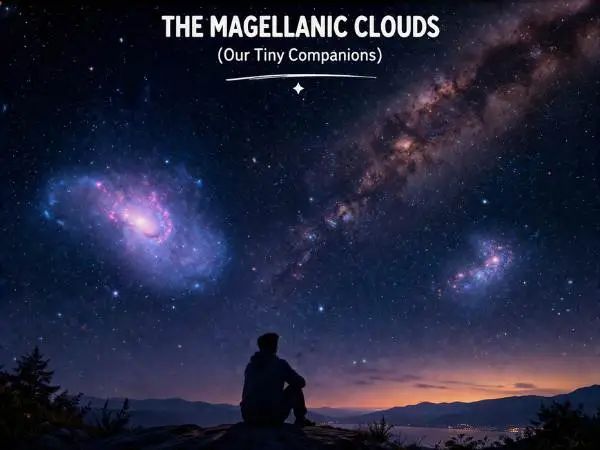
If you live in the Southern Hemisphere, you’re in for a treat! You can spot the Large and Small Magellanic Clouds right up in the sky. They are quirky “dwarf galaxies” that actually orbit around the Milky Way like tiny cosmic moons. They don’t have that perfect spiral shape, but they are super busy making new stars in giant clouds of gas.
5. The Sombrero Galaxy (The Cosmic Hat)
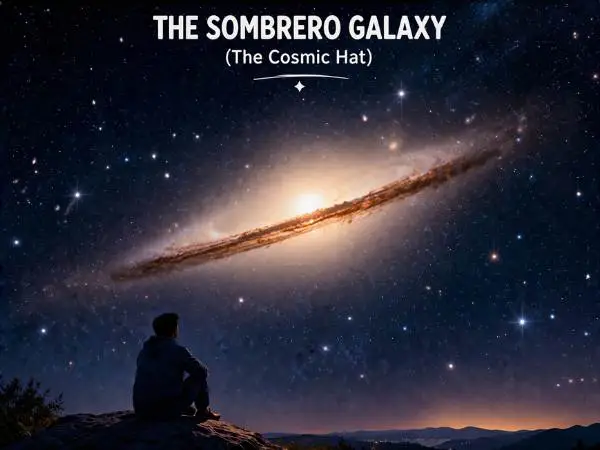
Moving a bit further out, we have the Sombrero Galaxy! It gets its name because, well, it looks exactly like a giant hat floating in space! It features a huge, glowing central bulge and a thick, dark ring of dust around its edge. Because we view it almost perfectly from the side, that dark dust ring looks just like the wide brim of a classic sombrero!
6. The Whirlpool Galaxy (The Classic Spiral)
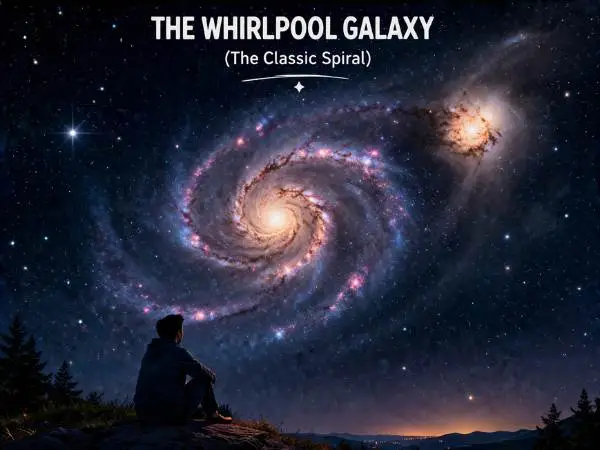
The Whirlpool Galaxy is your classic, picture-perfect spiral. It has gorgeous, sweeping arms that look like a giant pinwheel! The coolest part? If you look closely, you can see it playing a cosmic game of tug-of-war, using its gravity to pull on a smaller galaxy right at the end of one of its arms!
7. The Cigar Galaxy (The Star Factory)
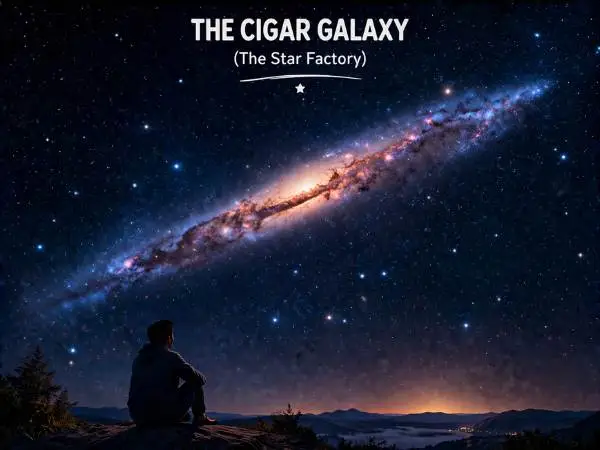
The Cigar Galaxy totally breaks the spiral mold—it’s stretched out and irregular, looking a lot like a glowing cigar. It’s known as a “starburst” galaxy because it is pumping out new stars about ten times faster than the Milky Way! All this crazy activity creates massive, glowing winds that blow right out of its center.
8. The Pinwheel Galaxy (The Big Beauty)
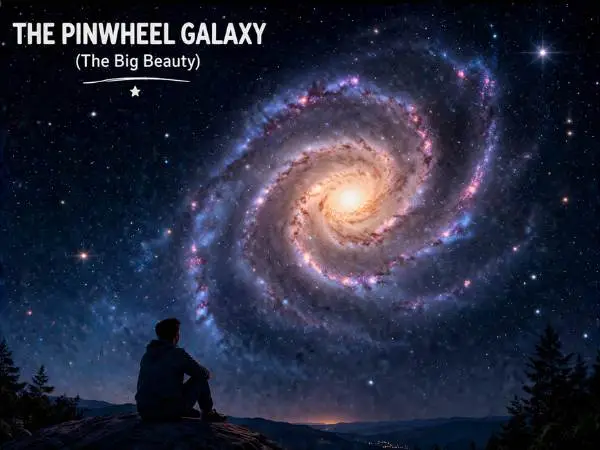
The Pinwheel is an absolute giant, much bigger than our Milky Way! We get to look at it perfectly face-on, so we can see its huge, loosely wrapped spiral arms. Those arms are decorated with bright pink spots, which are basically massive nurseries where thousands of baby stars are being born!
9. The Black Eye Galaxy (The Bruised Fighter)
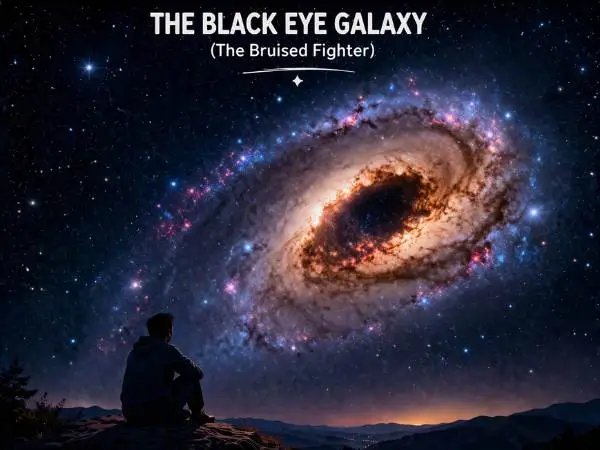
This one looks like it’s been in a heavyweight fight! It has a bright core but a scary, dark band of dust right in front of it, giving it a “black eye.” Even weirder, the gas on the outside is spinning in the exact opposite direction of the inside! Scientists think this happened because it swallowed up another galaxy a billion years ago.
10. The Cartwheel Galaxy (The Cosmic Bullseye)
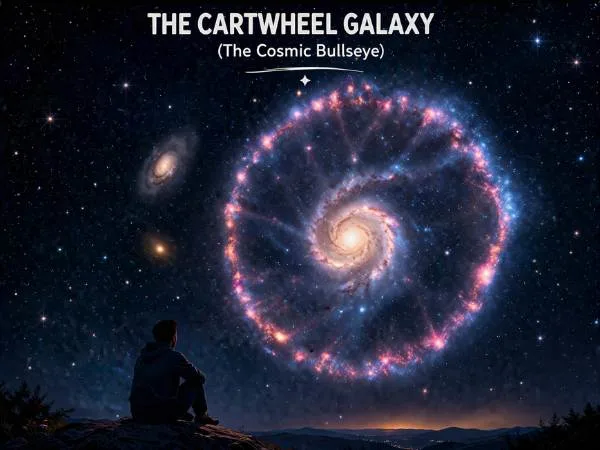
Imagine a glowing bicycle wheel in deep space! The Cartwheel Galaxy has a bright center and a huge outer ring of new stars. How did it get this weird shape? A long time ago, a smaller galaxy shot straight through its center like a bullet! The crash sent massive shockwaves rippling out, creating this awesome bullseye effect.
ALSO READ : – Biggest Snakes of the World: Facts, Myths, Real Sizes, and the Truth Behind Giant Snake Stories
Why Does All This Matter?
You might be thinking, “Okay, this is cool, but why should I care?” Well, even though these galaxies are mind-bogglingly far away, learning about them helps us figure out how the universe works and where we came from. Realizing how huge and wild the cosmos is makes you look at life a little differently and shows how everything is beautifully connected!
Frequently Asked Questions (FAQ)
How many galaxies are actually out there?
We can’t count them all, but scientists guess there are anywhere from 200 billion to 2 trillion galaxies in the observable universe! To put that in perspective, there are likely more stars in space than there are grains of sand on every beach on Earth.
Can I see any of them without a telescope?
Yes! If you get away from city lights, you can see the Milky Way, Andromeda, and the Magellanic Clouds with just your eyes. For the rest, you’ll definitely need a telescope.
What’s hiding in the center of these galaxies?
Scientists are pretty sure that the centers of most big galaxies, including ours, are home to supermassive black holes! Their crazy gravity helps anchor the whole galaxy together.
Are there aliens out there?
We still don’t know for sure! But with billions of galaxies, each packed with billions of stars and planets, the odds are pretty high that we aren’t alone out there.
How do we get those amazing space pictures?
We have to thank space telescopes like Hubble and James Webb! Because they float way up in space, they don’t have to look through Earth’s blurry clouds and air, giving us crystal-clear photos.
Final Thoughts
The universe is a wild, busy place full of crashing galaxies, new stars, and crazy shapes! Even though we’re just hanging out on a tiny planet in the Milky Way, the fact that we can look up and figure out our cosmic neighborhood is pretty amazing. Keep looking up, because we’re always discovering something new! Which of these wild galaxies is your absolute favorite? Let me know in the comments below!