

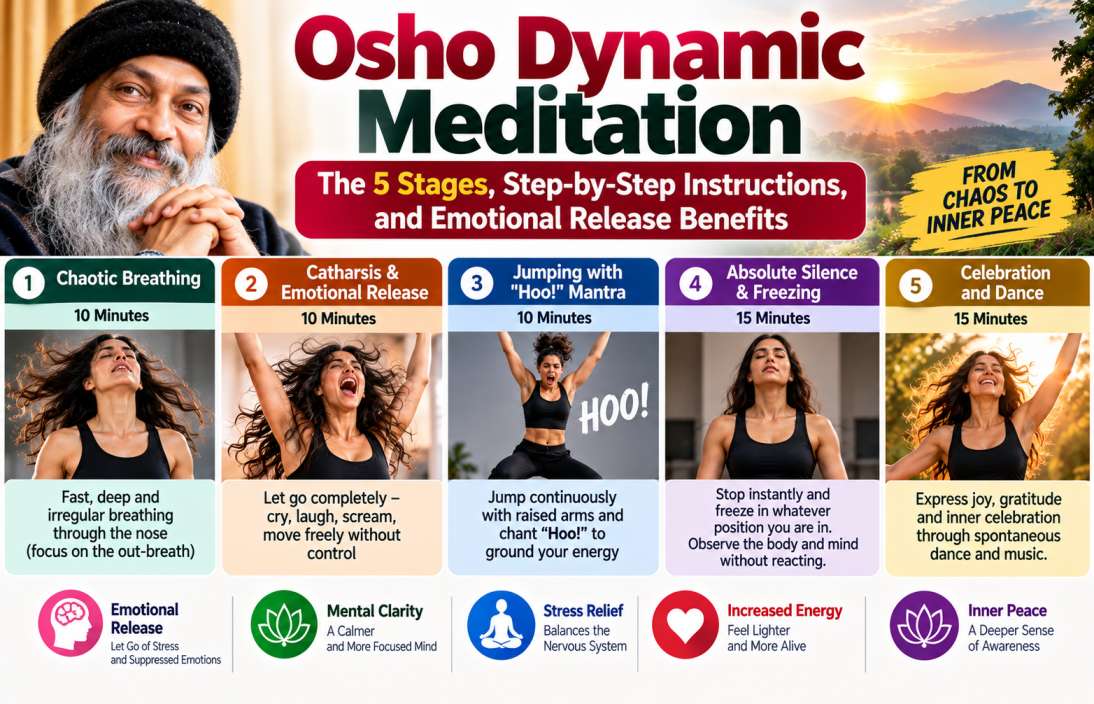
Do you find it hard to sit still when your mind feels busy? Thoughts may keep coming, even when you try to relax. Osho Dynamic Meditation takes a different approach. It begins with active movement, deep breathing, and sound before moving into silence.
This meditation method was developed by Osho. It combines five stages of breathing, emotional expression, mantra chanting, stillness, and dance. The full practice lasts one hour and is traditionally done in the early morning. (Official Osho Dynamic Meditation instructions)
People often explore this practice to express emotions, feel more aware of their bodies, and create time for quiet reflection. But the experience differs from person to person. There is limited clinical research on Osho Dynamic Meditation itself, so claims that it clears trauma or resets the nervous system should not be treated as proven medical facts.
This guide explains the five stages, how to prepare, and how to approach the practice safely.
What Is Dynamic Meditation? (Why Active Release Comes Before Silence)
Osho Dynamic Meditation is an active meditation method designed to combine vigorous activity with periods of stillness. Instead of beginning with silent sitting, it asks the practitioner to move, breathe, make sounds, and then become still.
The method has five stages:
| Stage | Practice | Duration |
|---|---|---|
| 1 | Chaotic breathing | 10 minutes |
| 2 | Emotional expression and movement | 10 minutes |
| 3 | Jumping and the “Hoo!” mantra | 10 minutes |
| 4 | Stillness and observation | 15 minutes |
| 5 | Dance and celebration | 15 minutes |
| Total | Complete session | 60 minutes |
The stages follow a set order. Specially composed music is often used to mark each transition. (Osho Dynamic Meditation guide)
The Philosophy of Catharsis: Clearing the Mind’s Clutter First
Catharsis means expressing emotions rather than keeping them hidden. In Osho Dynamic Meditation, the second stage allows a range of movements and sounds, such as laughing, crying, shaking, or shouting.
The idea behind the method is that active expression can help a person notice feelings and habits that may be hard to recognise during ordinary silent meditation.
This does not mean that every person has suppressed emotions that need to be released. Nor does a strong emotional response prove that old trauma has been removed. Crying, laughing, or shaking during a session can have many causes.
Some people prefer active meditation because they find it hard to sit quietly at first. Others may prefer traditional meditation, which often involves observing thoughts, following the breath, or repeating a mantra.
Neither style is right for everyone. Choose a method that fits your comfort, health, and personal goals.
How Active Meditation Affects the Nervous System
Fast breathing, vigorous movement, and sudden stillness can produce noticeable changes in how your body feels.
Rapid, deep breathing may cause lightheadedness, tingling, weakness, or shortness of breath if it leads to hyperventilation. Hyperventilation lowers carbon dioxide levels in the blood and can trigger uncomfortable symptoms.
The stillness stage gives you time to observe your body after the active phases. Some people report feeling calm or more aware after the session. Others may feel tired, unsettled, or emotionally overwhelmed.
It is better to describe this as a possible personal experience than to call it a guaranteed nervous system reset. General meditation research suggests potential benefits for well-being, but the evidence does not establish that this particular method treats anxiety or removes stored emotions.
The 5 Stages of Dynamic Meditation Explained Step by Step
The traditional Osho Dynamic Meditation session lasts 60 minutes. The instructions below follow the published five-stage format, with practical safety points for people who are new to the method.
Stage 1: Chaotic Breathing (10 Minutes)
The first stage focuses on active breathing without a fixed rhythm. In the traditional method, breathing is done through the nose, with attention placed on the out-breath.
The aim is to stay alert to the breathing rather than follow a comfortable, steady meditation rhythm.
How to approach this stage:
- Stand in a stable position in a clear space.
- Begin breathing actively through the nose, if comfortable.
- Keep your attention on the out-breath.
- Allow natural body movement without forcing it.
- Remain aware of how your body feels throughout the stage.
The traditional instructions call for intense, fast breathing. This can be physically demanding, so do not force your breath or push through warning signs. Beginners should seek instruction from a qualified teacher and avoid deliberately overbreathing beyond their ability.
Stop if you feel dizzy, faint, confused, or short of breath. Severe or persistent symptoms need medical attention.
Stage 2: Catharsis and Emotional Release (10 Minutes)
The second stage centres on expressive movement. The traditional method invites participants to let their bodies move in response to whatever they are feeling.
This may include crying, laughing, shaking, dancing, or making sounds. You do not need to produce a dramatic reaction for the practice to count.
How to approach this stage:
- Let your movement respond to how you feel.
- Use simple movements such as shaking your hands, moving your shoulders, or stepping in place.
- Make sounds only if you feel comfortable and have a suitable space.
- Stay aware of your surroundings and avoid movements that could cause injury.
- Slow down or stop if you feel overwhelmed or physically unwell.
Don’t force tears, anger, or any other emotion. The goal is not to create a particular feeling or prove that something has been released.
For some people, expressive movement may feel freeing. Others may feel little change. Both experiences are valid.
If the practice brings up distressing memories or intense emotions that are hard to manage, stop and seek support from a qualified mental health professional.
Stage 3: Jumping and Anchoring the Mantra “Hoo!” (10 Minutes)
In the traditional third stage, practitioners raise their arms and jump while repeating the sound “Hoo!” with each landing. The method places emphasis on the rhythm of the mantra and movement.
This stage involves repeated impact and can be tiring. It may not suit people with joint pain, balance problems, or certain medical conditions.
How to approach this stage:
- Stand with enough space around you.
- Raise your arms if this feels comfortable.
- Repeat “Hoo!” with a steady rhythm.
- Use small, controlled jumps only if your joints and balance allow them.
- Avoid pushing through pain or extreme fatigue.
A lower-impact version can use repeated heel raises or gentle knee bends without jumping. If you are learning the method, ask an experienced teacher how to adapt it without losing your balance.
The “Hoo!” sound is part of the spiritual method. Claims about its effects on specific energy centres belong to the practice’s spiritual framework and are not established medical facts.
Stage 4: Absolute Silence and Freezing (15 Minutes)
The fourth stage marks a sharp change. After the active phases, the instruction is to stop and remain still.
The purpose is to observe what is happening in the body and mind without trying to change every sensation.
How to approach this stage:
- Stop moving when the stage begins.
- Remain in a position that is safe and stable.
- Observe your breathing, heartbeat, thoughts, and body sensations.
- Avoid deliberate adjustments unless needed for safety or comfort.
- Stay attentive without judging what you notice.
The traditional version asks practitioners to freeze in their current position. If your balance is poor or you feel unsafe, do not risk a fall to follow the instruction literally. Safety comes first.
You may notice calm, restlessness, warmth, tiredness, or no marked change. There is no need to force a special experience.
Stage 5: Celebration and Dance (15 Minutes)
The final stage brings movement back into the practice. Traditional instructions invite practitioners to dance with the music and express whatever feels natural.
The stage is not about performing for others. It gives you time to move freely after the period of stillness.
How to approach this stage:
- Begin moving gently as the music starts.
- Let your movements follow the rhythm.
- Dance within your physical limits.
- Keep enough space around you.
- Finish with a few quiet moments before returning to daily tasks.
You can choose gentle swaying or stepping instead of energetic dance. If you need to keep noise down, the published instructions describe quieter alternatives for the expressive stages.
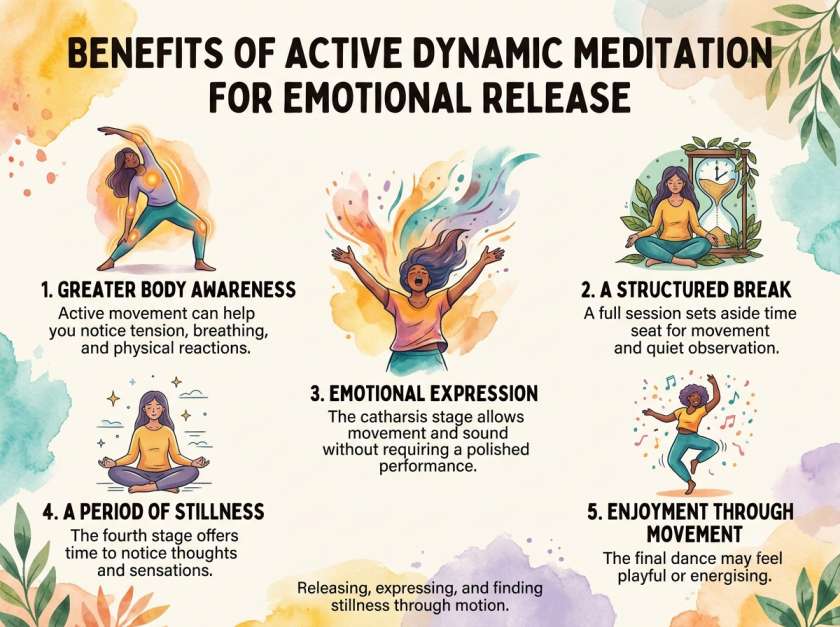
Benefits of Active Dynamic Meditation for Emotional Release
People may be drawn to Osho Dynamic Meditation because it combines movement, sound, attention, and rest. Some find this mix more engaging than sitting quietly.
Possible personal benefits include:
- Greater body awareness: Active movement can help you notice tension, breathing, and physical reactions.
- A structured break: A full session sets aside time for movement and quiet observation.
- Emotional expression: The catharsis stage allows movement and sound without requiring a polished performance.
- A period of stillness: The fourth stage offers time to notice thoughts and sensations.
- Enjoyment through movement: The final dance may feel playful or energising.
These are possible experiences, not guaranteed health outcomes. High-quality clinical studies have not established that Osho Dynamic Meditation reliably treats anxiety, depression, trauma, or chronic stress.
General meditation research points to potential benefits for some people, but meditation can also cause distress or unwanted effects in some cases.
Practical Tips for Beginners Practising at Home
The traditional method is designed as a full one-hour session. It is intense enough that preparation matters, especially if you are new to exercise or active meditation.
Setting Up Your Space and Choosing a Time
Osho’s published instructions recommend practising early in the morning, on an empty stomach, and in loose, comfortable clothing. The method can be practised alone or in a group.
For home practice:
- Choose a clear space with a non-slip floor.
- Move furniture and sharp objects out of the way.
- Wear comfortable clothes that let you move freely.
- Use a timer or the official stage music so you know when to change stages.
- Keep water nearby for after the session.
- Make sure you have enough space to move without hitting objects.
The original method recommends keeping the eyes closed. If you’re new, have balance concerns, or are practising in an unfamiliar space, prioritise safety and get guidance before following that instruction.
Common Pitfalls and How to Manage Physical Exhaustion
A common beginner mistake is trying to perform each stage at maximum intensity. You don’t have to exhaust yourself to gain a useful experience.
Start by learning the sequence with a trained instructor. Ask about lower-impact options, especially for jumping and the breathing stage.
Avoid this practice or seek medical guidance first if you have a heart or lung condition, uncontrolled high blood pressure, a history of fainting or seizures, a recent injury or surgery, or a condition that may be affected by vigorous movement or rapid breathing. The safest choice depends on your individual health. General guidance on mind-body practices recommends discussing personal risks with a healthcare professional when medical conditions may affect safety.
During a session, stop if you develop chest pain, strong dizziness, faintness, unusual breathlessness, or severe distress. Do not push through these symptoms to finish the hour.
If silence or intense expression feels uncomfortable, a gentler meditation may be a better place to start.
Frequently Asked Questions
Can Beginners Practise Osho Dynamic Meditation at Home?
Yes, the method can be practised alone, but beginners may find it helpful to learn from a qualified instructor first. The vigorous breathing and jumping stages require extra care. Make sure your space is clear and use suitable modifications when needed.
What Is the Total Duration of Osho Dynamic Meditation?
The full traditional session lasts 60 minutes: 10 minutes of breathing, 10 minutes of catharsis, 10 minutes of jumping and “Hoo!” chanting, 15 minutes of stillness, and 15 minutes of dance.
Is Dynamic Meditation Better Than Silent Meditation for Anxiety?
There is no strong evidence that Osho Dynamic Meditation is better than silent meditation for anxiety. The two methods differ in structure and intensity. People respond differently, and those with anxiety may prefer a gentler approach. Seek professional support if anxiety affects daily life.
What Should I Do If I Feel Dizzy During the Breathing Stage?
Stop the intense breathing and return to gentle, natural breaths in a safe position. Don’t restart the intense breathing while symptoms continue. If symptoms are severe, persist, or include chest pain, fainting, or major breathing trouble, seek urgent medical care.
Does Emotional Catharsis Remove Suppressed Anger or Trauma?
Not necessarily. Strong emotional expression can feel meaningful, but it does not prove that trauma has been resolved. For trauma-related distress, work with a qualified mental health professional and choose practices that feel safe.
Final Thoughts: Is Osho Dynamic Meditation Right for You?
Osho Dynamic Meditation combines five stages: active breathing, expressive movement, mantra chanting, stillness, and dance. The traditional sequence lasts one hour and places attention on the body as well as the mind.
Some people enjoy its active style and find it easier to engage with than silent sitting. Others may prefer calmer practices with less intense breathing and movement.
Start by learning the method, use a clear space, and respect your body’s limits. Don’t force emotional reactions or push through physical warning signs.
The aim is to practise with awareness, not to chase dramatic experiences. Choose a form of meditation that fits your health, comfort, and personal beliefs.